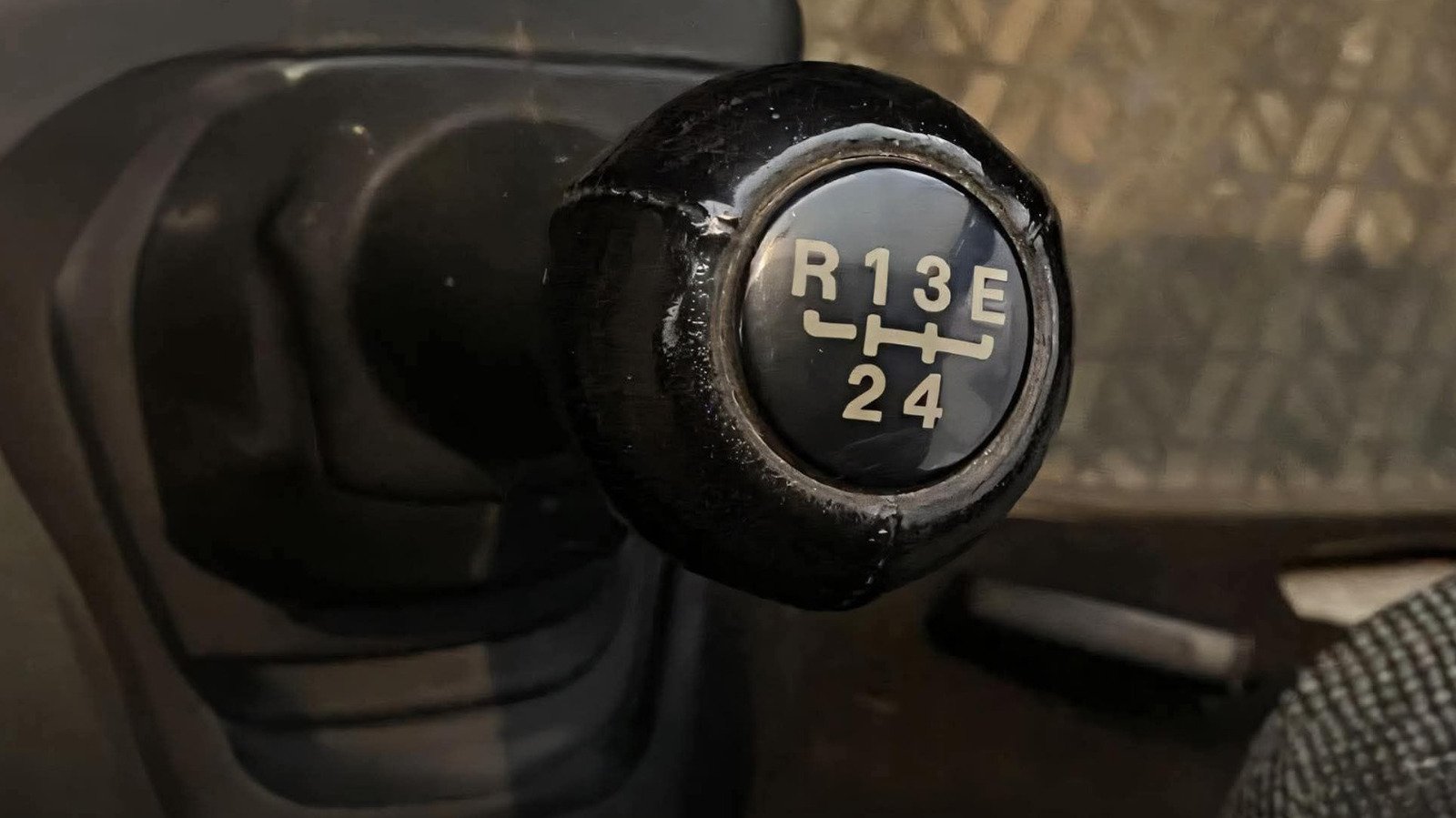
In recent years, there has been a notable resurgence in the popularity of manual transmissions, prompting a renewed interest in the various markings found on older gear shifters. One such marking is the letter „E,“ which stands for Economy and signifies a fuel-saving function within manual gear systems.
The Economy setting functions similarly to a higher gear option. It allows drivers to select gears from the first to the fourth, as well as reverse and the economy gear. This feature is designed to keep engine RPM lower during extended drives, resulting in improved fuel efficiency. By reducing engine strain, the Economy mode encourages drivers to upshift sooner rather than excessively revving the gears, ultimately leading to a smoother power delivery.
Many individuals today may be unaware of the Economy mode, and the reason is quite straightforward: the „E“ designation is not commonly encountered on modern vehicles. This rarity is also observed with markings such as „G“ and „B.“ Additionally, automatic transmissions may feature unique indicators, including „S“ and the +/- symbol, allowing for manual shifting while driving.
The Evolution of the Manual Transmission
Manual transmissions, notorious for their common issues, have traditionally featured clearly defined gear positions marked by numbered settings and a reverse gear, each serving a specific role. However, as technology has advanced, vehicle design has evolved alongside these transmissions. As engines became more powerful, additional gears were introduced to enhance the overall driving experience. This development granted drivers access to more than just three forward gears; lower gears offer improved torque, while higher gears provide increased efficiency.
With engine advancements came changes to the physical layout of manual gear shifters. Many vehicles transitioned to column-mounted shifters, commonly referred to as a „three-on-the-tree“ configuration, marking a significant shift from earlier designs prior to World War II. This new setup allowed for larger front seats, accommodating three passengers instead of two. However, as the market progressed, gear shifters began to return to the floor of the vehicle.
Contemporary gear shifters have evolved to feature five, six, or even seven speeds, resulting in smoother shifting and reduced lag compared to older systems. This modernization provides a more comfortable driving experience and improved overall performance. Some manual models now even include user-friendly technologies that display the gear position during operation.