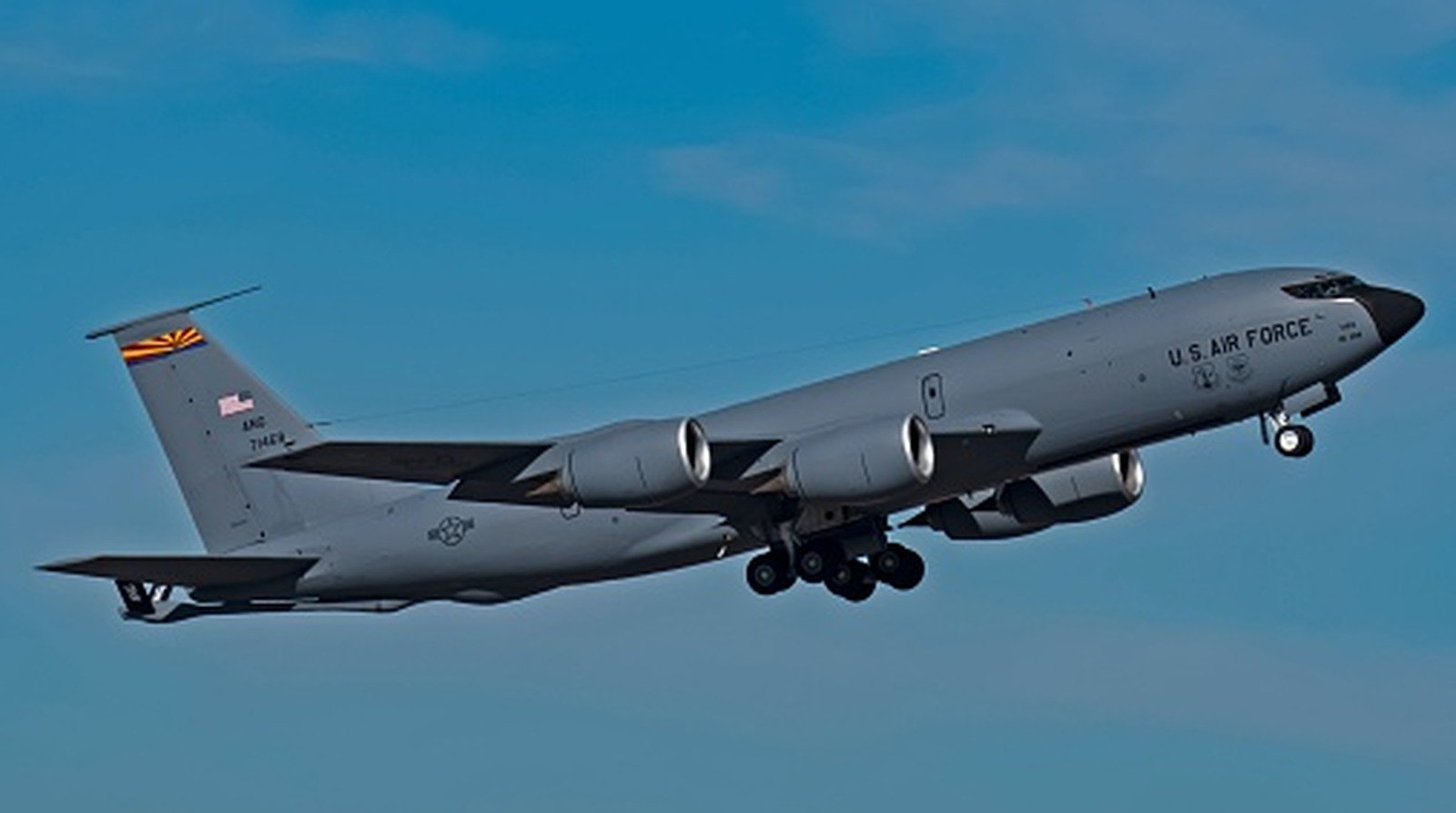
The United States Air Force’s innovative „Ghost Tanker“ KC-135R is playing a pivotal role in the testing and certification of new military aircraft, showcasing its strategic importance in modern military operations. This specialized tanker aircraft, stationed at Edwards Air Force Base in California, is designed to enhance the capabilities of the Air Force by providing essential in-flight refueling during extensive field testing of new warplanes.
While air refueling aircraft may lack the dramatic flair associated with fighter jets and heavy bombers, their operational significance within the U.S. military is unparalleled. The availability of tankers enables military aircraft to extend their operational range dramatically, exemplified during the 2025 operation titled Midnight Hammer, where B-2 Spirit bombers undertook an extraordinary 36-hour mission from Whiteman Air Force Base in Missouri to strike targets in Iran.
The Ghost Tanker serves a crucial function within the 370th Flight Test Squadron, supporting the 412th Test Wing by refueling experimental aircraft and ensuring their readiness for deployment. Unlike standard KC-135R models, this particular aircraft is equipped with advanced telemetry systems and cameras to gather performance data while conducting in-flight refueling operations. This intelligence is vital for the assessment and eventual certification of new aircraft entering service.
The KC-135 Stratotanker, in service for over 60 years, remains an essential asset for the Air Force. The Ghost Tanker, a unique variant distinguished by its testing capabilities, is integral to the evolution of the military’s aerial refueling strategies. Its contributions extend beyond conventional refueling; it also assists in validating the operational readiness of advanced aircraft including the next-generation B-21 Raider.
The certification process for new combat aircraft with the Ghost Tanker requires meticulous testing, involving various scenarios and operational parameters. These trials often span several months, during which data on fuel loads, speed, and weight distribution are meticulously recorded and analyzed by engineering teams on the ground.
As the United States Air Force continues to integrate drones and other advanced technologies into its refueling systems, the Ghost Tanker stands at the forefront of innovation, paving the way for future enhancements in aerial operations. This evolution signifies a profound shift in the tactical capabilities of the Air Force, promising even greater efficiency in its mission profiles.