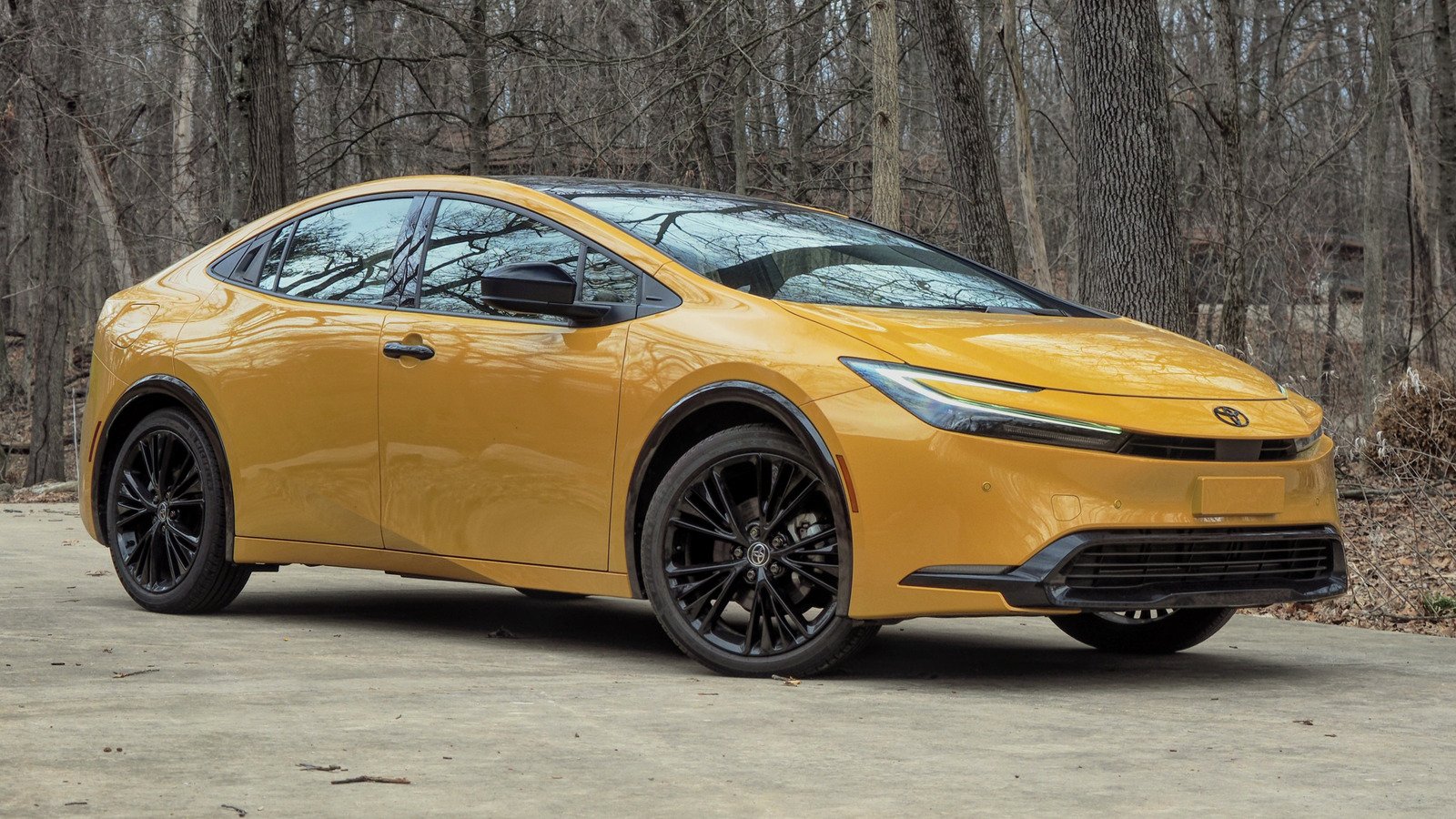
The 2026 Toyota Prius Plug-In Hybrid Electric Vehicle (PHEV) aims to capture the attention of buyers as they seek alternatives to soaring gasoline prices. This model offers drivers a transition towards electrification without the range anxiety that accompanies fully electric vehicles. The Prius PHEV, formerly known as Prius Prime, boasts an expanded EV range and practicality, promising up to 40 miles of electric-only driving.
Historically, the Prius brand has represented a pioneering spirit in hybrid technology since its initial launch in 1997. The PHEV version, now starting at a base price of $34,970, offers improvements over its standard counterpart, which begins at $29,745. The plug-in hybrid’s larger battery provides a noteworthy advantage, allowing for 40 miles of electric driving, a significant leap compared to the standard Prius.
Design changes have been notable, with the Prius transitioning from its once-derided aesthetics to a more appealing form. The Nightshade Edition features distinct touches, such as special 19-inch black alloy wheels and a unique color, elevating its visual appeal. However, the redesign does come with compromises in cargo space compared to earlier models.
Performance-wise, the Prius PHEV delivers sufficient power with its 220-horsepower engine, providing engaging city driving dynamics. The vehicle’s responsiveness benefits from instant electric torque, allowing for spirited acceleration, while the suspension is tuned for comfort rather than sportiness.
Despite the advancements, some peculiarities persist in the vehicle’s ergonomics, particularly within the infotainment system. Although the Prius maintains numerous buttons for control, certain functions—like regenerative braking settings—require navigating through the display, which may challenge user-friendliness.
Regarding model options, while the Nightshade Edition stands out in aesthetics starting at $38,990, more economical choices exist. The standard Prius SE is the most affordable plug-in option and offers better fuel economy at a combined 52 mpg versus the Nightshade’s 48 mpg. This efficiency difference may influence buyer decisions weighing cost against features.
One significant drawback for the Prius PHEV is the absence of an all-wheel-drive option, available in the regular Prius. For consumers in colder regions, this could prove consequential. The PHEV’s annual operating costs are lower, approximated at $800 for the PHEV compared to $1,100 for the standard model. However, the initial purchase price of the plug-in hybrid may outweigh these cost savings for some owners.
Ultimately, while the Prius PHEV offers a compelling blend of electric range and hybrid capabilities, it may not suit every driver’s needs. The vehicle serves as a substantial option in the evolving market for electrified transportation, catering to a niche that bridges traditional gas engines and fully electric powertrains.